


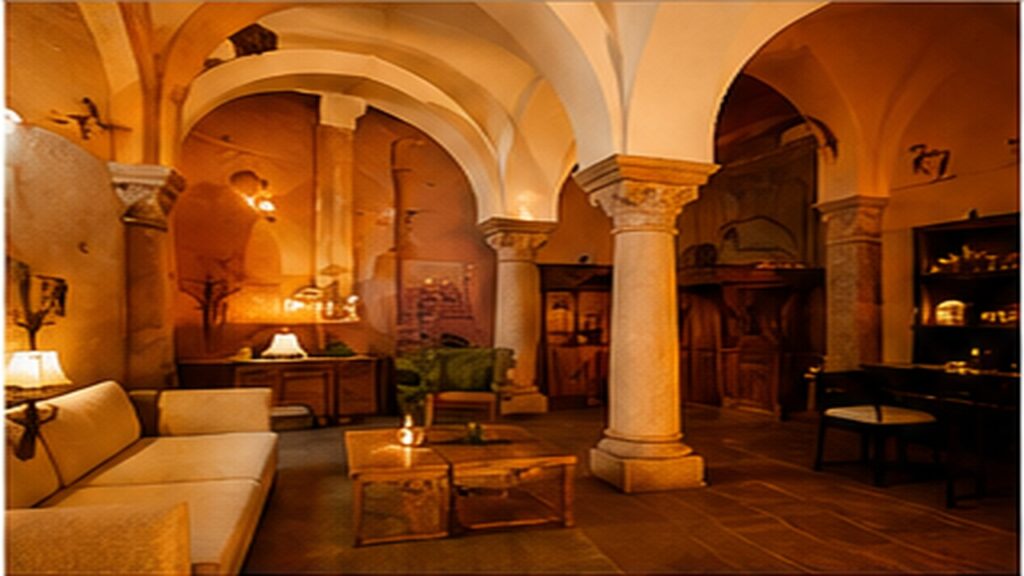
History of a Monument Hotel in Córdoba | La Ermita Suites
Every historic building holds two stories. The first is visible: façades, walls, arches, columns and rooms that any visitor can see. The second remains hidden until documents, names, dates and decisions emerge to explain why the building exists, who used it and how it managed to survive into the present. The history of La Ermita Suites belongs to this second category. It is not a fictional narrative created to decorate a hotel, but a chronology connected with three properties in Córdoba’s historic centre and documented from 1412 onwards.
Following that chronology means moving through donations to the Cathedral Chapter, medieval leases, an uprising against Jewish converts, a religious apparition, the construction of a chapel, Casa del Santero, closures, secularisation, markets, architectural transformations and a long restoration project that culminated in 2021. Every stage left a mark, even though not all of them are immediately visible.
This article invites you to look at the hotel as though it were an archive built from stone. Each section recovers one of the decisive moments in its evolution and explains why that past matters to today’s guest. By the end, you will be able to walk through the building with a different perspective and better understand the value of staying in a Monument Hotel in Córdoba where memory is part of the experience.
The Research That Gave the Building Its Story Back
The restoration of a historic property can be limited to protecting materials and structures, but truly understanding it requires research. Documents help reconstruct former uses, identify owners, connect the building with events in the city and prevent the intervention from turning the past into a superficial interpretation. In the case of La Ermita Suites, historical research made it possible to organise the main known events and create a chronology beginning in the early fifteenth century.
The value of that work lies in connecting a specific place with the wider history of Córdoba. Buildings do not appear in isolation: they depend on the Cathedral Chapter, the Convent of Santa Clara, Plaza de Abades and the transformations of the monumental district. The medieval house and shop, the Baroque chapel and the chapel keeper’s home belonged to different social systems. Brought together today within the same hotel, they illustrate the city’s ability to layer one period over another without completely erasing what came before.
Three Properties, One Contemporary Experience
La Ermita Suites is formed by three properties that once had different uses. This helps explain the diversity of its rooms and the individuality of its spaces. They were not designed from a uniform hotel floor plan, but had to be adapted to the existing configuration, the features discovered during the works and the demands of conservation.
The result is an intimate hotel with only six rooms, each connected to a specific part of the architecture. The sense of variety does not come from a decorative strategy, but from the fragmented nature of the complex. Staying in a room with a well, another with a Caliphate capital or a suite with a terrace means occupying a different point within the same shared history.
The Timeline as a Map for the Guest
Knowing the dates is not intended to turn a stay into a history lesson. Its purpose is to activate the imagination. When you know that the earliest document dates from 1412, the stone acquires a different timescale. When you learn about the Motín del Rastro, the neighbourhood stops being merely a picturesque backdrop. When you identify Casa del Santero, the café becomes the continuation of a house built for the person responsible for caring for the chapel.
The historical timeline of La Ermita Suites therefore works as a guide for reading the building. It does not require anyone to memorise facts, but it offers reference points that help interpret what can be seen. We will now explore its most significant moments.
1412: a House and Shop Connected with the Cathedral Chapter
The earliest document found concerning one of the properties now forming La Ermita Suites dates from 1412. It is a donation contract transferring a combined house and shop to the Chapter of Córdoba Cathedral. The owners surrendered the property in exchange for being buried in the Mosque-Cathedral. Following the donation, the Chapter leased the use of the house and shop to a succession of private individuals.
The Relationship Between Home, Trade and Spirituality
The combined house-and-shop arrangement was common in medieval towns: domestic and commercial space could coexist within the same property. The document also shows the importance of religion. The donation was not a purely economic transaction, because it was tied to the desire to be buried in a place of extraordinary spiritual importance.
This detail helps explain the close relationship between the properties and the Mosque-Cathedral. The area was not simply residential. It formed part of a network of buildings, institutions and activities shaped by the presence of the great place of worship and by the Cathedral Chapter’s role in urban life.
What Remains Today of That Medieval Property
Not every feature from the fifteenth century can be identified directly in today’s guest experience. The buildings went through fires, alterations and divisions. Nevertheless, the document establishes historical continuity: it proves that one of the hotel’s spaces was already integrated into the activity of the city more than six centuries ago. That continuity is the foundation of the story, even though the architecture changed repeatedly.
1473: the Motín del Rastro and Violence Against the Conversos
In 1473, the house was burned together with other properties in the historic centre during the uprising against Jewish converts known as the Motín del Rastro. At the time it was rented to Gonzalo Sánchez, a surgeon of Jewish-convert origin. After the attack it became vacant and was later rented again to the notary Miguel Vázquez de Ávila and his wife, Constanza Vázquez.
An Episode That Forces Us to Look Beyond Beauty
Córdoba’s historic centre attracts visitors through its streets, courtyards and monuments, but it also preserves the memory of social conflict. The events of 1473 remind us that coexistence between cultures was neither linear nor always peaceful. Converso identity, religious tension and collective violence all formed part of the city’s history.
Including this episode in the hotel’s narrative prevents the past from becoming merely decorative. Heritage does not only celebrate periods of splendour; it also helps us acknowledge traumatic events. The house that was burned and later rented again illustrates the vulnerability of its inhabitants and the ability of urban spaces to continue after destruction.
The Importance of Personal Names
The presence of names such as Gonzalo Sánchez, Miguel Vázquez de Ávila and Constanza Vázquez turns the chronology into a human story. We are no longer speaking only about a plot of land, but about people who worked, lived and experienced periods of uncertainty. Although we do not know every detail of their lives, the surviving documents prevent them from disappearing completely.
A Connection with Córdoba’s Jewish Quarter
Staying near the Jewish Quarter makes it possible to explore places connected with Jewish and Converso communities. The history of the property adds a particular dimension to that walk. Travellers can read the neighbourhood not only through its best-known monuments, but also through the houses and everyday activities that formed part of that world.
1682: an Apparition on the Wall of the Convent of Santa Clara
On 9 April 1682, a miraculous apparition of the Virgin was documented on the wall of the Convent of Santa Clara, in the area now occupied by the hotel reception. Residents built a street altar open to the square. The event transformed an urban wall into a focus of devotion and changed the relationship between the building, the convent and the local community.
The Square as a Religious and Social Setting
An altar open to the square does not belong only to the interior of a church. It becomes part of everyday life, visible to people passing by, working or living nearby. Devotion merges with public space and turns architecture into a meeting place. This helps explain why the future chapel was so directly connected with its surroundings.
Today, reception occupies a point associated with that event. Guests arrive, check in and receive information in a place that had religious significance centuries ago. The functions have changed completely, but the spatial continuity makes it possible to imagine the square filled with residents gathered around the altar.
From the Apparition to the Construction of the Chapel
The apparition of 1682 was the direct predecessor of the Chapel of the Immaculate Conception. In the following years, devotion and the practical needs of worship encouraged a more permanent architectural project. The movement from an outdoor altar to a chapel demonstrates how a shared experience can physically transform a city.
1700–1752: the Birth and Consolidation of the Chapel of the Immaculate Conception
On 28 June 1700, permission was requested to construct the Chapel of the Immaculate Conception. Authorisation was granted on 18 July that same year. The first Mass was celebrated three years later and, in 1712, the process of building the vestry began. A chaplaincy was created in 1742 and, on 19 April 1752, permission was granted to construct Casa del Santero beside the chapel.
1700: the Licence That Turned Devotion into Architecture
The building licence marks the moment when devotion associated with the convent wall acquired a permanent architectural form. The chapel had to respond to the religious practices of the community and to the limitations of the available site. Its modest size would, more than a century later, become one of the arguments used to close it.
The hotel’s present name comes from this period. The word “Ermita”, meaning chapel or hermitage, is therefore not a branding device detached from the building, but a direct reference to its past. The guest experience rests on a historically verifiable identity.
1703 and 1712: the First Mass and Construction of the Vestry
The first Mass symbolised the beginning of the new religious space’s active use. The later construction of the vestry shows the need for supporting rooms. These additions help us imagine daily life in the chapel: services, preparation for worship, the storage of objects and interaction with members of the congregation.
When a building changes use, ancillary rooms can be just as important as the main hall. The contemporary restoration had to interpret this accumulated layout and decide how to integrate the remains into an entirely different hotel programme.
1742: the Creation of a Chaplaincy
The creation of a chaplaincy under the will of Bartolomé Romero y Arévalo shows that the chapel had acquired an established religious structure. Documents preserved in the Provincial Historical Archive of Córdoba add precision to the account and connect it with identifiable people and institutions.
1752: Casa del Santero
The licence granted in 1752 authorised the construction of a home for the hermit who would care for the church. The chapel keeper was essential to the building’s daily maintenance, opening, security and relationship with worshippers. His house became part of the complex and today performs a different welcoming role.
The Café as a New Chapter for Casa del Santero
The former home has become the café at La Ermita Suites. The change is profound, yet the space retains a domestic scale and a connection with caring for visitors. The courtyard terrace, the Caliphate arch and the sound of water create a pause that remains in keeping with the intimate character of the building.
1857–1929: Closure, Secularisation and Further Transformation
In 1857, during the episcopate of Juan Alfonso de Alburquerque Berión, the chapel was closed to worship because it was considered too small. In 1868, the Convent of Santa Clara was secularised by the state, although its assets had already been confiscated in 1835. The large convent block was transformed, divided and separated. At the end of the nineteenth century and throughout the twentieth, the area acquired new uses and architectural layers.
1857: the End of Its Religious Function
The closure marked the end of a period that had begun with the apparition in 1682. For approximately a century and a half, the space had functioned as a place of worship. Its small size, which initially encouraged a close relationship with the square, eventually came to be regarded as a limitation.
Closure did not mean the immediate disappearance of the architecture. As happens with many historic buildings, the use changed before the physical form did. The structure became available for new purposes and started to participate in urban processes unrelated to its original religious role.
1868: the Division of the Convent Block
The secularisation of the Convent of Santa Clara decisively transformed the surroundings. Large religious properties were fragmented and adapted to civil, commercial or residential needs. These operations changed routes, boundaries and façades, producing the complex urban fabric that the later hotel project would eventually encounter.
The City as an Organism in Constant Change
The history of the complex demonstrates that conservation does not mean keeping everything exactly the same. A city changes because its residents and uses change. The contemporary challenge is to recognise those transformations, preserve important features and ensure that adaptation does not erase the character accumulated over centuries.
1878 and the New Cathedral Market
The building’s chronology is also connected with the New Cathedral Market, inaugurated in 1878. Historic markets were places of economic and social exchange capable of reorganising activity in an area. This phase recalls the commercial function of the medieval house and shop, showing how the surroundings maintained an ongoing relationship with the everyday life of Córdoba.
1929: a New Façade
In August 1929, one of the façades associated with the architect Enrique Tienda Pesquero was constructed. The intervention added a twentieth-century layer to the complex. The presence of a relatively recent façade beside much older elements confirms that the hotel does not belong to one single period.
2004–2021: Recovering Three Buildings to Create a Monument Hotel
The three properties were purchased in 2004 and the La Ermita Suites project began. The hotel opened on 27 May 2021. The seventeen years separating these dates reflect the complexity of researching, designing and restoring a historic complex before transforming it into accommodation.
The Challenge of Preserving Heritage Without Sacrificing Comfort
A hotel needs services, insulation, climate control, bathrooms, accessibility, security and facilities that did not exist in the original buildings. Introducing them without destroying the architecture requires specific solutions. Pipes, structures and equipment must be integrated discreetly so that heritage remains the principal focus.
The philosophy of the project can be seen in the rooms at La Ermita Suites. Historic features were not removed to a separate exhibition area, but incorporated into the guest experience. A well presides over one room, a stone wall accompanies a duplex suite, a Caliphate capital is integrated into another room and the arch becomes a visual point of reference from several parts of the hotel.
Six Rooms as a Response to the Architecture
The small number of rooms should not be understood only as a choice of exclusivity. It also responds to the scale of the complex and the intention to respect its configuration. Creating more units would have required greater fragmentation. Keeping the total at six makes it possible to offer distinctive spaces, preserve views and retain a clearer relationship with the historic features.
Double Deluxe Well and the Recovered Well
The Double Deluxe Well Room demonstrates how a discovery can define an entire guest room. The well is neither concealed nor treated as an inconvenience; it becomes the centre of the narrative.
Deluxe Column and Córdoba’s Caliphate Past
The Deluxe Column Junior Suite includes an original column and a tenth-century Caliphate capital. The feature connects the hotel’s history with Islamic Córdoba and offers a particularly compelling experience for travellers interested in architecture.
The Penthouse Suite and the Monumental Landscape
The Penthouse Suite with private terrace relates to history from another perspective: not through an interior discovery, but through views of the Mosque-Cathedral and the old city. The terrace allows guests to contemplate the landscape in which the building’s entire chronology unfolded.
Why This History Improves the Travel Experience
Historical knowledge is not an academic addition disconnected from hospitality. It can change the way guests inhabit the hotel. A corridor becomes more than a route between rooms, the courtyard is understood as part of an architectural sequence and Casa del Santero acquires a specific identity. Every space becomes more memorable because it possesses a story.
The Emotion of Recognising What You Have Read
Before travelling, you can explore the timeline, the gallery or this article. When you arrive, you will recognise certain features and discover others. This process creates a satisfaction similar to visiting a city with a good guide: it does not impose an interpretation, but provides useful ways of looking.
The article Sleep Surrounded by History in Córdoba explores how this memory becomes part of the guest’s daily experience, from choosing a room to walking through the Jewish Quarter. Reading both articles combines the historic dimension with practical ideas for planning a stay.
Accommodation That Helps You Remember the Destination
Many journeys eventually merge in the memory because the hotels feel interchangeable. When accommodation is genuinely connected with the destination, it acts as an anchor. The well, the column, the balconies and the terrace become images associated with Córdoba. The hotel could not be moved to another city without losing its meaning.
History, Hospitality and a Human Scale
History also influences the atmosphere. Six rooms, contained spaces and a close relationship with the team create a more personal experience. The architecture is not observed from a distance; guests move through it several times every day. That daily repetition creates familiarity and allows new details to emerge throughout the stay.
How to Explore This History During Your Stay
The best way to approach the hotel’s past is to combine reading, observation and walking. Begin by exploring the history page and the image gallery. Then, when you arrive, ask about the main features and take time to observe the courtyard, the arch, the façades and their relationship with the square.
Connect the Building with the Neighbourhood
Step out into Plaza de Abades and explore the area around Santa Clara and the Mosque-Cathedral. Their proximity makes it possible to imagine how the house and shop, convent, chapel and commercial spaces once formed part of the same compact city. You do not need to follow a rigid route: simply walk with a few dates in mind and notice how different buildings and periods overlap.
Choose a Room That Reflects Your Interests
If you are interested in archaeology, the column suite or the room with the well may be especially suggestive. If you prefer a relationship with the urban landscape, the penthouse and rooms with balconies offer a different perspective. The page presenting the historic rooms in Córdoba makes it easy to compare the options.
Turn the History into a Celebration
A stay inside a monument can provide the setting for an anniversary, a surprise or a gift. In the Gift La Ermita Suites section, you will find vouchers combining accommodation and experiences. For a complete proposal for two, you can also explore the guide to a romantic getaway in Córdoba.
Keys to Understanding a Building with So Many Historical Layers
Do Not Look for One Single Construction Date
The complex cannot be summarised by a single year. The documentation from 1412, the eighteenth-century chapel, Casa del Santero, the transformations of the nineteenth century and the twentieth-century façade all belong to different moments. Its value lies precisely in this layering. Asking what year the hotel was built requires an answer in the form of a story rather than a number.
Distinguish Between Preserved Features and Historical Recreation
Historic elements gain meaning when their origin is explained. The discovered well, the column, the capital, the walls and the arch do not have the same value as decoration inspired by the past. The available information helps guests recognise that distinction and appreciate the effort required to integrate the features during restoration.
Understand Restoration as a New Stage
The opening of the hotel does not close the building’s history. It adds a contemporary use that helps keep it active. Conservation is more sustainable when a property has a function compatible with its architecture and generates resources for its care. Every guest participates indirectly in this latest stage.
Book a Night Within More Than Six Centuries of Memory
The history of La Ermita Suites does not follow a straight line. It begins with a medieval house and shop, passes through an uprising, is transformed by a religious apparition, takes the form of a chapel, incorporates the home of a chapel keeper, loses its religious function, participates in the urban changes of the nineteenth century and receives a new façade in the twentieth. Finally, three properties are brought together in a hotel project inaugurated in 2021.
This journey explains the value of the hotel. It is not merely old, nor does it simply preserve a collection of isolated objects. It represents a place’s ability to adapt without losing all the traces of its past. Guests enter that continuity for a few days and add a contemporary experience to a story that began long before their arrival.
Check the availability of La Ermita Suites, a Monument Hotel in Córdoba, choose the room that best connects with your interests and prepare to discover accommodation where every wall has something to tell.