


Sleep Surrounded by History: the Unique La Ermita Suites Experience in Córdoba
Some hotels simply offer a place to rest, while others can change the way we remember an entire journey. The difference does not always lie in the size of the room, the number of services or an eye-catching interior design. Sometimes it comes from something far harder to imitate: the feeling that the place where you sleep had a life long before your arrival, still carries the traces of the people who once inhabited it and allows you, for a few hours, to step into the history of a city. That is exactly what La Ermita Suites offers in the heart of Córdoba’s historic centre, where heritage is not an added decorative element but the essence of the entire stay.
Staying here means waking up close to the Mosque-Cathedral, walking through the lanes of the Jewish Quarter and returning to a building made up of spaces that have undergone centuries of change. It means looking at a Caliphate arch, discovering an ancient well incorporated into a guest room or resting beside a column and capital connected with Córdoba’s Islamic past. Above all, it means understanding that the phrase “sleep surrounded by history” can be far more than a slogan when the hotel itself preserves architectural features and documented stories dating back to the early fifteenth century.
In this article, you will discover what makes this Monument Hotel in Córdoba so different, how its rooms connect with the memory of the building and why its location turns every stay into an especially intense way to experience the city. You will also find ideas for planning a break, choosing the suite that best suits you and making the most of every moment, from breakfast in a historic setting to an evening walk through the monumental quarter.
What It Really Means to Sleep Inside a Monument
The expression “historic hotel” is used frequently, although it does not always describe the same reality. It may refer to an old building that has been completely remodelled, a hotel decorated in a classical style or a property that retains part of its original architecture. At La Ermita Suites, the idea takes on another dimension because the building functions both as accommodation and as visible evidence of different periods in Córdoba’s history.
Its walls hold the legacy of the Roman, Arab, Jewish and Christian cultures that left their mark on the city. This coexistence is not explained only through information panels or written descriptions. It can be felt in the structure, the materials, the remains recovered during the restoration and the way each room was designed around features that could never be replicated. That is why the six rooms are not copies of the same template: every one responds to a different layout, architectural feature and historical narrative.
Heritage You Experience Rather Than Observe from a Distance
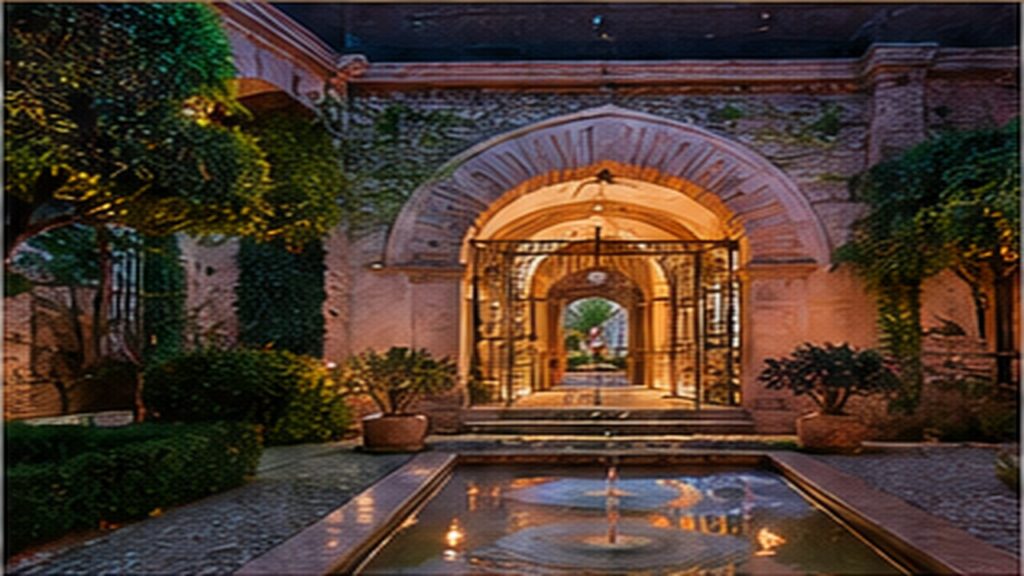
In a museum, visitors observe heritage for a limited time and then leave. In a Monument Hotel, the relationship becomes much more intimate. You can cross the courtyard when you return from dinner, listen to the fountain as the city begins to fall silent or have breakfast in a space that once formed part of the former chapel. Heritage stops being a background and becomes part of your daily routine throughout the stay.
This proximity changes the experience. Old stone, arches and preserved remains do not feel like theatrical scenery because they belong to a place that has evolved over the centuries. The restoration had to resolve a complex challenge: protecting the historic character of three separate properties while also providing privacy, rest, safety and contemporary comfort. The result seeks a careful balance between conservation and use, memory and the present day.
The Difference Between Decorating with History and Preserving It
A decorative scheme can be recreated in almost any city. A well uncovered during restoration, a Caliphate capital or the former Casa del Santero cannot be moved without losing their meaning. Their value depends on their location and on the historical continuity around them. That authenticity is one of the reasons the experience is so appealing to travellers who want more than centrally located accommodation and are looking for a deeper connection with Córdoba.
History also creates individuality. In a conventional hotel, the choice between rooms often depends mainly on size or views. Here, the narrative matters as well: sleeping beside an old well, choosing a suite with balconies overlooking Plaza de Abades, looking towards the Caliphate arch or booking a penthouse with a terrace and views of the Mosque-Cathedral. The room becomes part of the journey rather than simply somewhere to leave your luggage.
More Than Six Centuries of Events Within the Same Walls
The history of La Ermita Suites has been reconstructed through documents and research that make it possible to follow the evolution of the properties now forming the hotel. The chronology begins in 1412 and moves through religious, social and architectural events that also reflect the transformation of Córdoba’s historic centre.
1412: the Earliest Known Document
The first document found concerning one of the properties dates from 1412. It records the donation of a combined house and shop to the Chapter of Córdoba Cathedral in exchange for the owners being buried in the Mosque-Cathedral. From then on, the use of the property was leased to different private individuals. This evidence places the documented origins of the site long before the chapel was built and shows that the location already formed part of the economic and religious life of medieval Córdoba.
For today’s guest, knowing this beginning transforms the way the space is perceived. This is not a building created to look old, but a place whose story can be followed for more than six hundred years. The connection with 1412 acts as an entrance to a much broader narrative filled with changes of use, ownership, belief and urban life.
1473: the Motín del Rastro and the Memory of the Conversos
In 1473, during the uprising against Jewish converts known as the Motín del Rastro, the house was attacked and burned together with other properties in the historic centre. At the time it was rented by Gonzalo Sánchez, a surgeon of Jewish-convert origin. After the revolt it became vacant and was later leased again. This episode links the building with one of the most painful moments in Córdoba’s social history.
Remembering this dimension matters because heritage is not made up only of architectural beauty. It also contains conflict, silence, loss and complicated processes of coexistence. Staying in the heart of the Jewish Quarter means walking through streets where different communities left both visible and invisible traces. The hotel forms part of that historical fabric and helps us understand that Córdoba’s identity was shaped by many overlapping cultural layers.
1682: an Apparition and an Altar Open to the Square
On 9 April 1682, an apparition of the Virgin was documented on a wall of the Convent of Santa Clara, in the area where the reception is now located. Local residents created a street altar that opened towards the square. The event changed the religious meaning of the site and prepared the way for the later construction of the Chapel of the Immaculate Conception.
The square and the building then became connected through a place of devotion visible from outside. That relationship between urban life and spirituality remains evocative for today’s traveller: stepping out into Plaza de Abades is enough to appreciate the closeness of the façades, everyday routes and places of worship that once structured life in the old city.
1700–1752: the Chapel of the Immaculate Conception and Casa del Santero
In 1700, permission to build the Chapel of the Immaculate Conception was requested and granted. The first Mass was celebrated a few years later, and in 1712 the construction of the vestry was promoted. A chaplaincy was created in 1742 and, in 1752, authorisation was given to build Casa del Santero, the home of the hermit responsible for looking after the church.
This period is essential for understanding the hotel’s present name. The chapel is not an aesthetic reference chosen afterwards, but a real part of the building’s past. Casa del Santero also retains its identity within the project: today it houses the historic café at La Ermita Suites, where contemporary hospitality enters into dialogue with the purpose the property served in the eighteenth century.
The Former Chapel as a Place of Hospitality
Transforming a religious space into a place of hospitality demands sensitivity. The aim is not to erase its former function or reduce it to a curiosity. The architecture should continue to communicate what the space once was, even while it accommodates new activities. Breakfast, reception and the shared areas now allow guests to inhabit these rooms without forgetting where they came from.
Casa del Santero and the Continuity of Small Gestures
The figure of the santero, or chapel keeper, was associated with the daily care of the building. Centuries later, the house remains connected with welcome, pause and attention to guests. The small café and its surroundings recover that intimate scale: somewhere to sit, listen to the sound of water and rest before or after exploring the city.
1857–1929: Closure, Transformation and New Architecture
In 1857, the chapel was closed to worship because it was considered too small. In 1868, the secularisation of the Convent of Santa Clara accelerated the transformation and division of the large urban block it had occupied. The area later took on new uses, including the New Cathedral Market, and in 1929 one of the façades associated with the architect Enrique Tienda Pesquero was constructed.
This succession of closures, divisions and building works shows that historic properties never remain frozen in time. They adapt to the needs of each period, lose certain features, gain others and accumulate visible signs of those decisions. The contemporary restoration did not begin with an untouched monument, but with a complex group of buildings that had to be studied carefully before any intervention could take place.
2004–2021: from the Project to the Hotel’s Opening
The three properties were acquired in 2004 and the La Ermita Suites project began. The process culminated with the opening of the hotel on 27 May 2021. Between those dates came years of historical research, planning and restoration designed to integrate the surviving heritage into an intimate six-room hotel.
The length of the process helps explain the result. Recovering a building of this kind is not a matter of quickly renewing finishes. It requires interpreting discoveries, respecting structures, meeting safety and comfort requirements and introducing contemporary installations without allowing them to dominate. A visit to the La Ermita Suites gallery reveals how that combination is expressed in the courtyards, façades, rooms and shared spaces.
Six Rooms, Six Ways to Connect with Córdoba
The hotel has six outward-facing rooms, all designed to preserve the essence of the building. They share contemporary comforts such as climate control, an integrated kitchenette, high-speed Wi-Fi and services intended to support a restful stay, but each one has an identity defined by its architecture, layout or views. Choosing among the charming rooms in Córdoba also means deciding which story you would like to take away from your journey.
Double Deluxe Well: the Intimacy of an Ancient Well
The Double Deluxe Well Room is centred around a well discovered and recovered during the restoration. Incorporating this feature into the room turns an intimate space into somewhere with a personality that could never be reproduced. It is an excellent option for guests who value distinctive details and prefer a calm, enclosed atmosphere.
For Couples Looking for Somewhere Different
The appeal of this room does not depend on vast dimensions, but on its closeness to the historic feature and its views towards the open-air courtyard and Caliphate arch. It is an especially suggestive choice for a first visit to Córdoba or a short break in which the accommodation should create a strong sense of place from the very beginning.
Superior Junior Suite: Space and Accessibility
The Superior Junior Suite offers additional space, two living areas and facilities adapted for guests with reduced mobility. Its layout makes it possible to enjoy the room for more than sleeping alone. It also demonstrates that heritage conservation can coexist with accessibility measures and a more inclusive understanding of hospitality.
Duplex Junior Suite: Two Levels and Balconies Above the Square
The Duplex Junior Suite with balconies is arranged across two levels and preserves an original stone wall connected with the period of the chapel. Its balconies link the interior with Plaza de Abades. It is a compelling choice for guests who enjoy observing the life of the city from their room and appreciate an unconventional layout.
Deluxe Column Junior Suite: Sleep Beside a Caliphate Feature
The Deluxe Column Junior Suite incorporates a distinctive window with an original column and Caliphate capital. Here, architecture becomes the centre of the story. The room recalls the depth of Córdoba’s Islamic past and the project’s ability to preserve a discovery without separating it from everyday experience.
A Room for Lovers of Architecture
Travellers drawn to the Mosque-Cathedral, Medina Azahara or Andalusi architecture will find this suite a natural continuation of their visits. After exploring the monuments, they return to a room where heritage is still present and can be contemplated in peace.
Arch Junior Suite: Balcony and Views of the Caliphate Arch
The Arch Junior Suite with balcony combines a separate living area with a balcony and views towards the courtyard and Caliphate arch. It suits guests who want to balance intimacy, space and a visual connection with one of the hotel’s most representative architectural features.
Penthouse Suite: Private Terrace and Views of the Mosque-Cathedral
The Penthouse Suite with private terrace is the most spacious option. It has separate areas, a private terrace and views towards the Mosque-Cathedral and the rooftops of the historic centre. Its atmosphere encourages guests to devote time to the accommodation itself: enjoy a slow morning, observe the light over the city or end the day in a private setting.
An Experience Worth Celebrating
Thanks to its space and privacy, the penthouse is particularly appealing for anniversaries, special journeys and romantic breaks. In the guide to a romantic getaway in Córdoba, you will find a complete proposal for combining this suite with walks, breakfast and experiences designed for two.
A Location That Allows You to Experience Córdoba on Foot
The hotel experience does not end at the front door. Its address in Plaza de Abades places guests in the heart of the historic centre, only a short distance from the Mosque-Cathedral. This proximity makes it possible to organise a far more relaxed visit. Every outing does not have to become a long journey: you can return to rest, change clothes, have a drink or enjoy your room before heading out again.
The City Early in the Morning, Before Its Rhythm Changes
One of the privileges of staying in the centre is being able to step outside early. The streets are still quiet, businesses are beginning to open and the light falls differently across the façades. An early walk around the Mosque-Cathedral reveals details that are easy to miss during the busiest hours of the day.
Afterwards, you can return to enjoy a charming breakfast in Córdoba. The experience turns the beginning of the day into something connected with the building itself, whether you choose the historic interior or the outdoor courtyard beside the sound of flowing water.
The Jewish Quarter at Dusk
When the day’s visits come to an end, the location once again makes a difference. The streets of the historic centre recover a more intimate atmosphere. Walking back means there is no dependence on transport and allows you to extend dinner or improvise a route without worrying about distances. The hotel becomes a nearby refuge within the same monumental landscape.
This relationship between accommodation and surroundings is one of the defining features of the stay. It is not only a question of sleeping close to the main places of interest, but of feeling temporarily part of the neighbourhood. The square, the arch, the former chapel and the Mosque-Cathedral belong to the same urban sequence.
The Small Rituals That Turn a Stay into a Memory
Memorable journeys are often created through simple moments: a quiet breakfast, a conversation at reception, a room you genuinely want to spend time in or a courtyard to return to after a long walk. La Ermita Suites works on this intimate scale. With only six rooms, the experience can feel much more personal than it would in a large hotel.
Breakfast in a Place Filled with History
Breakfast at La Ermita Suites is not conceived simply as a practical service. The setting of the former church and the opportunity to use the open-air courtyard add an emotional dimension. Beginning the day surrounded by historic architecture extends the feeling of experiencing a different Córdoba: slower, more intimate and more connected with the place.
A Pause in Casa del Santero
The café in Casa del Santero occupies the property built in 1752 for the hermit who looked after the church. Sitting there connects a contemporary purpose with the memory of the site. The terrace, beside the courtyard and Caliphate arch, offers a particularly pleasant place to pause between visits.
Personal Attention and Accessibility
Hospitality is also measured by the ability to welcome people with different needs. The hotel incorporates measures described on its page about accessibility at La Ermita Suites, including the BeepCon system for blind and visually impaired guests, Braille signage and solutions designed to make orientation and use of the facilities easier.
These measures do not replace the need to check specific conditions before booking, but they reflect an important intention: making a historic building compatible with a more accessible experience. Guests with particular requirements should contact the team directly to confirm the most suitable room and any support that may be needed.
How to Make the Hotel the Centre of Your Journey
When accommodation has this much personality, it deserves a place in the itinerary. Booking it only as somewhere to sleep and spending the entire day outside can mean missing a significant part of the experience. A better approach is to leave free time to enjoy the room, courtyard and shared areas, especially after arrival or before going out for dinner.
Choose the Room for the Experience, Not Only the Size
Think about the memory you want to associate with the journey. Are you drawn to an archaeological feature, a private terrace, a balcony overlooking the square or a duplex layout? Each option suits a different way of travelling. The page presenting the rooms at La Ermita Suites allows you to compare their characteristics and discover which one best matches the number of guests and the kind of break you are planning.
Make Time for the History
Before arriving, read the article about the secret history of this Monument Hotel or explore the official timeline. Knowing a few key events changes the way you look at the spaces. The arch becomes more than an architectural form and Casa del Santero gains a more precise meaning. Information does not reduce the mystery; it deepens it by helping you imagine the lives that passed through the building.
Give the Experience as a Gift or Share It with a Group
The stay can also become a gift. The website presents gift vouchers and experiences in Córdoba combining accommodation, breakfast and additional activities. For family celebrations, trips with friends or small gatherings, it is also possible to enquire about exclusive use of the hotel for groups in Córdoba.
Tips for Enjoying Historic Accommodation Without Rushing
Alternate Sightseeing with Time to Rest
The closeness of the monuments makes it easy to return to the hotel between activities. Use that advantage to avoid an exhausting day. An hour’s pause can give you time to enjoy the room, organise photographs or sit beside the courtyard. Afterwards, the city can be experienced with more attention and the stay stops feeling like an endless sequence of visits.
Ask About the Features That Most Capture Your Attention
Historic details naturally create questions: the origin of a column, the former use of a house, the orientation of an arch or the relationship with the chapel. Speaking to the team and reading the available documentation enriches the journey. You do not need to memorise the whole chronology; choosing two or three stories that resonate with you is enough to follow them throughout the stay.
Photograph the Heritage with Respect
Images help preserve a memory, but it is best not to turn every space into a permanent photo set. Look first, enjoy the atmosphere and take photographs afterwards. In shared areas, respect the peace of other guests. The hotel’s intimate character also depends on these small gestures.
Use the Hotel as a Starting Point for Understanding the Neighbourhood
Once you have identified the building’s history, look for its connections with the square, Santa Clara, the Jewish Quarter and the Mosque-Cathedral. The complex becomes meaningful when it is understood as part of an urban fabric rather than an isolated object. This perspective turns everyday walks into an ongoing exploration.
The Best Way to Discover Córdoba Is to Stay Inside Its History
Córdoba has monuments that could justify a journey on their own, but its real strength appears when the city’s different layers become connected. The Mosque-Cathedral, the Jewish Quarter, the courtyards, the squares and the lesser-known buildings form a network of stories that are best understood by walking, observing and allowing time for discovery.
La Ermita Suites offers the opportunity to extend that experience beyond sightseeing. When you close the door of your room, history does not disappear: it remains in a well, a column, an arch, a façade or a house built for the chapel keeper. Contemporary comfort makes it possible to enjoy the past without giving up rest, while the location allows you to move in and out of the historic centre as though you were temporarily living within it.
If you are looking for a journey that does not end when the final guided visit is over, check the availability of La Ermita Suites in Córdoba. Choose the room that inspires you most, set aside time to enjoy it and prepare to discover what it feels like to sleep in a place that has been accumulating stories for more than six centuries.